-

Deniable and Disposable: Tehran’s New War on Western Leaders
Following the military campaign in early 2026 that resulted in the death of Iran’s former Supreme Leader Ayatollah Ali Khamenei, the geopolitical threat landscape has shifted toward highly aggressive, state-sanctioned retaliatory operations.1 Under the newly appointed Supreme Leader, Mojtaba Khamenei, the clerical regime has intensified its domestic mobilization and transnational threats.1 This escalation culminated in…
-
Not Without Cause: Iran’s Mistrust of Pakistan Is Rooted in Experience
Pakistan’s mediation between the United States and Iran continues. Delegations arrive and depart from Islamabad. Communiqués describe progress, or proximity to progress, in language calibrated to neither confirm nor foreclose. The ceasefire—brokered by Pakistan on April 8, extended once at Islamabad’s request — is holding, unevenly. The process is alive. What is under serious strain…
-
Strategic Reorientation: The Doctrine of Persistent Ground Raids in the Iranian Theater
The escalation of the 2026 Iranian conflict, codified as Operation Epic Fury, has reached a critical juncture where the limitations of traditional stand-off air power have necessitated a fundamental shift in US military strategy.1 While the initial phase of the campaign, which commenced on February 28, 2026, focused on the large-scale degradation of Iranian air…
-
Seeds of Influence: Iran’s Subtle War on Western Democracy Through Student Engagement
The Islamic Republic of Iran has long employed a layered and deliberate strategy to expand its global ideological influence. Central to this ambition is the state’s investment in Muslim students studying in the West. At first glance, these educational and cultural exchange initiatives may appear benign or even altruistic. However, upon deeper examination, they reveal…
-

China’s Covert Support of the Houthis
Introduction After the October 7 attack in 2023 by Hamas on Israel, the Houthi rebels opened their playbook against the Israelis on 14 November 2023 when the rebel group’s leader Abdulmalik al-Houthi announced: “Our eyes are open to constantly monitor and search for any Israeli ship in the Red Sea, especially in the Bab al-Mandab,…
-
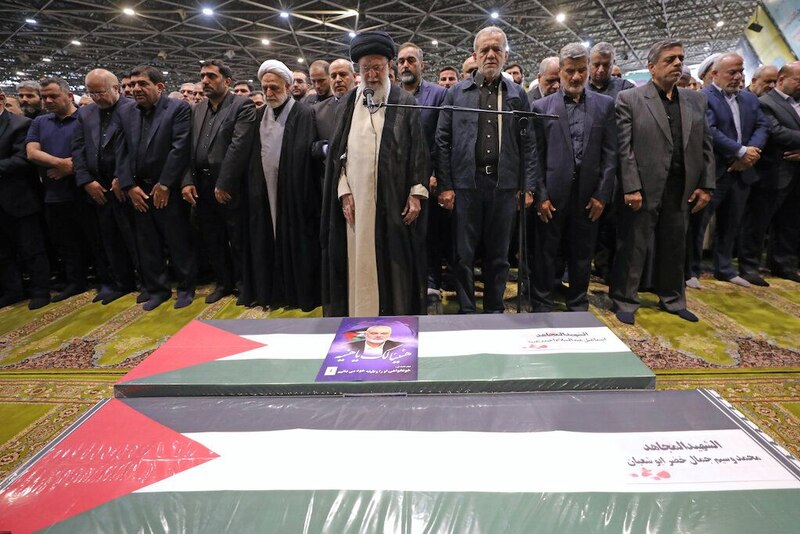
Ismail Haniyeh Assassination: Escalating Tensions in Middle East
By Vishesh Singh Ismail Haniyeh’s assassination on 31st July 2024 in Tehran marks a significant escalation in Middle Eastern tensions. Blamed on Israel, this act could provoke severe retaliation from Iran and its proxies, potentially igniting a broader regional conflict. Haniyeh was in Iran for the oath-taking ceremony of newly elected Iranian President Masoud Pezeshkian…
-

The US-Led NATO And Its Allies Need Dominance In Afghanistan Over Global Powers, Not Over Their Proxy Taliban
By Siddhant Hira and Kagusthan Ariaratnam As US-led NATO forces prepare to withdraw from Afghanistan, General Scott Miller — the United States’ longest-serving military commander in the area — told the BBC that the priority of NATO troops is “the risks to our forces” and “the risks to the future of Afghanistan.” General Miller’s comments…
-

The Impending Threat of Islamic Radicalization: A Look at Assimilation
By Kagusthan Ariaratnam & Ammna Nasser This article was originally published by “The NATO Association of Canada” on January 22, 2018. Youth radicalization has acquired renewed momentum in the current age of ISIS (Daesh). Repeated victories reported by the Iraqi and Syrian security forces are pushing Daesh to rethink survival strategies to live and fight…
-

Unintended Intelligence Consequences: How Yesterday’s Proxy Insurgents turned into Today’s Terrorists
Introduction During the Cold War, nations were increasingly sponsoring and/or supporting insurgencies. For instance, the United States of America supported Afghan-Mujahedin, Nicaraguan Contras, and Tibetan Buddhist fighters. The Soviet Union supported communist guerrillas in Angola, Greece, and South Africa. China supported insurgents in Vietnam. India supported Sri Lankan Tamil rebels. In fact, Trends in Outside…