-
Predators at Sea: Inside Terrorist Tactics Targeting Naval Security
This article critically examines the strategies and methodologies employed by terrorist organizations to target conventional naval assets, including merchant vessels and military ships such as frigates and destroyers. It focuses comprehensively on mechanisms used by terrorists to gather maritime intelligence, especially concerning naval technological systems like radar, sonar, GPS, and various weapon systems, including guns,…
-
The Shifting Global Order: From Military Dominance to Technological Supremacy and Canada’s Path to Sovereignty
The global order is in constant flux, shaped by economic shifts, political transformations, and technological advancements. Historically, the United States has projected power through military dominance, using interventions, alliances, and defense spending to maintain global hegemony. However, in recent years, American strategy has evolved, shifting from conventional military supremacy to technological control. This transition presents…
-
Canada’s Soft Power vs. America’s Hard Power: A Comparative Analysis
Canada and the United States are often juxtaposed in discussions of international influence. Canada is globally respected as a soft power nation, recognized for its human rights advocacy, humanitarian projects, and peacekeeping initiatives. Conversely, the United States has been feared for its hard power approach, exerting military and economic control, expanding its territorial jurisdictions, and…
-
Unmasking the 2019 Sri Lanka Easter Sunday Bombings: Intelligence Deception, Political Agendas, and State Involvement
The 2019 Easter Sunday bombings in Sri Lanka, which resulted in the deaths of over 250 individuals, have long been attributed to the Islamist extremist group National Thowheeth Jama’ath (NTJ), allegedly operating under the influence of ISIS. However, increasing evidence suggests the attack was not solely a terrorist act but a complex intelligence operation with…
-
The Role of Pakistan’s Inter-Services Intelligence (ISI) in Undermining International Peace Initiatives, Suppression of Dissent, and Promotion of Sectarianism
The Inter-Services Intelligence (ISI) of Pakistan has long been a controversial institution, accused of undermining international peace initiatives, suppressing domestic opposition, and fueling sectarian tensions. This article explores ISI’s involvement in destabilizing global security, its tactics of coercion against media and civil society, and its alleged role in promoting sectarianism, particularly under the influence of…
-
The Future Implications of Water Wars: A Global Perspective
As freshwater scarcity intensifies globally, competition over water resources is becoming a critical geopolitical and economic issue. Some nations have begun privatizing and even weaponizing water, raising concerns about future “water wars.” This paper explores the factors driving water conflicts, potential geopolitical flashpoints, and strategies for mitigating these tensions. Using a multidisciplinary approach, this study…
-
What Is The Most Appropriate Role For International Actors In Conflict Transformation?
Using a specific case to illustrate your argument, and with reference to debates about international norms, international law, morality and/or responsibility, make a case for humanitarian, military or diplomatic intervention. The aim of this title is to highlight the most appropriate role for international actors to play in conflict transformation. With such a wide range…
-

The Impending Threat of Islamic Radicalization: A Look at Assimilation
By Kagusthan Ariaratnam & Ammna Nasser This article was originally published by “The NATO Association of Canada” on January 22, 2018. Youth radicalization has acquired renewed momentum in the current age of ISIS (Daesh). Repeated victories reported by the Iraqi and Syrian security forces are pushing Daesh to rethink survival strategies to live and fight…
-

Recognizing Outdated Power and Eliminating the Divide: Countering Terrorism through Smart Power
Introduction Countering terrorism through “smart power” is a concept deliberated on creative thinking to combat one’s enemy, especially terrorists. This essay will examine the reconceptualization of traditional approaches toward counterterrorism and discuss how ideologies from a Western liberal democracy can respond to an unconventional terrorist ideology. To begin with, the term “power” will be defined.…
-
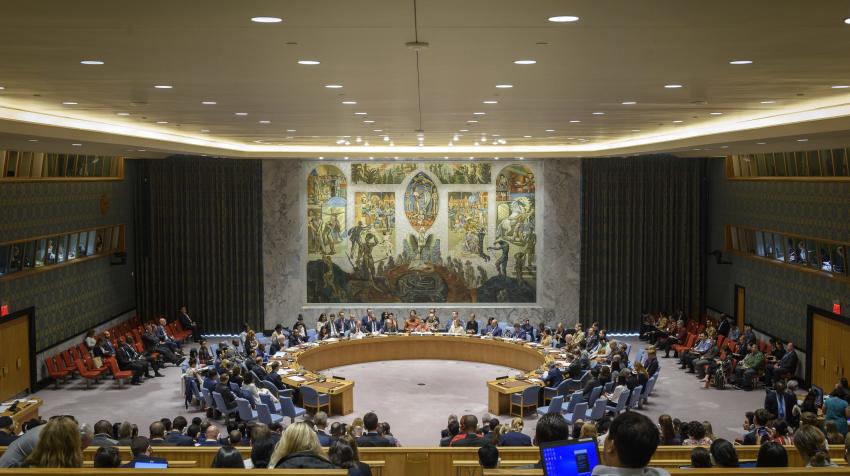
Responsibility to Protect Syria – A Case Study
Introduction It is widely believed that non-intervention is the norm within an international society since international law restricts the use of force except for purposes of self-defense or by way of collective enforcement as authorized by the United Nations Security Council (Bellamy and Wheeler 2014). This misunderstanding is grounded in the debate on how the…