

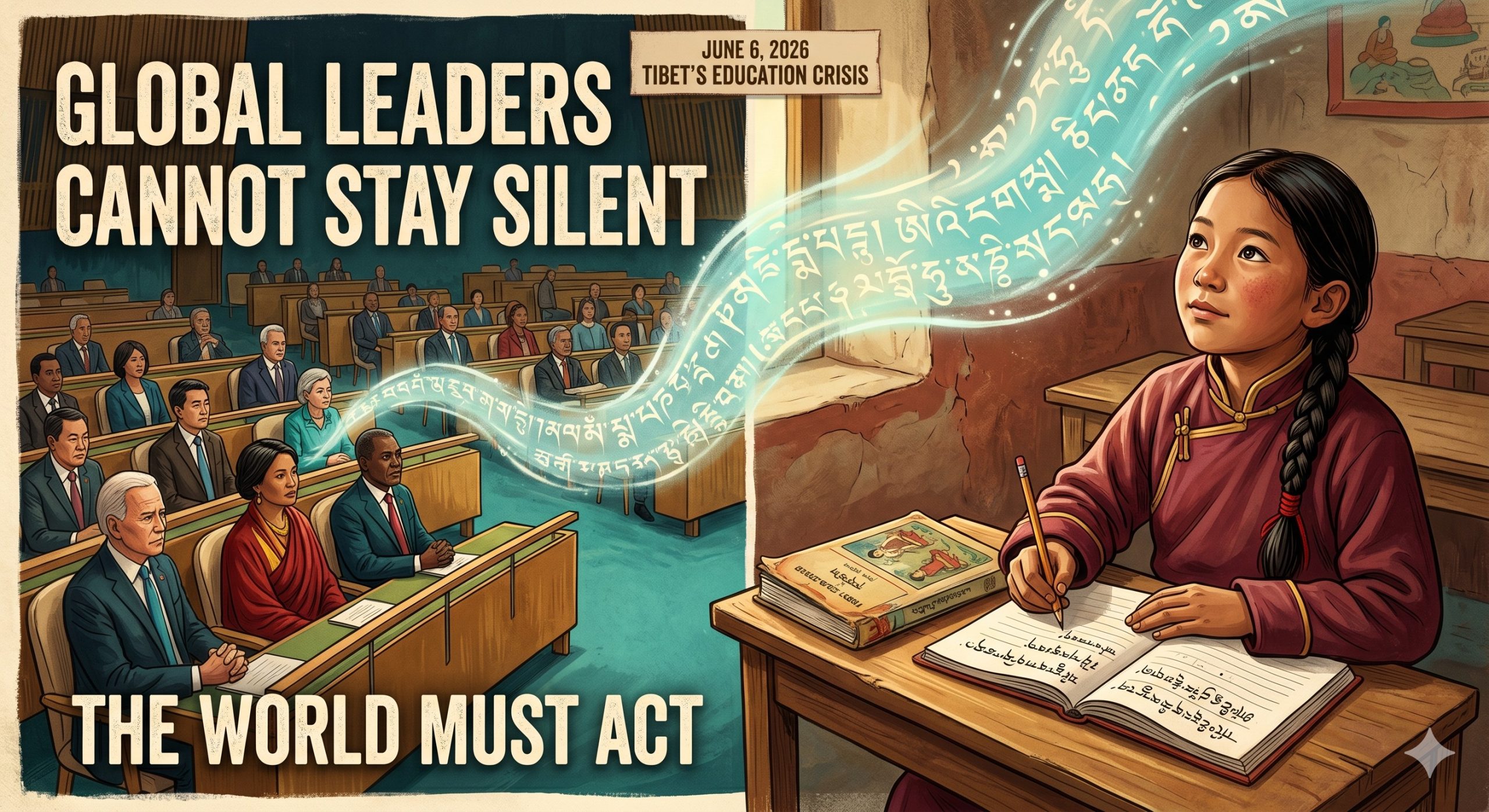
The struggle for educational and linguistic rights in Tibet has become one of the most urgent yet underreported human rights issues of our time. As authorities continue to expand policies that prioritise Mandarin Chinese over Tibetan-language instruction, the future of Tibet’s cultural identity, linguistic heritage, and educational autonomy faces unprecedented challenges.
The international community can no longer afford to treat Tibet’s education crisis as a peripheral issue. Global leaders, multilateral institutions, academic organisations, and civil society groups must act decisively to defend the right of Tibetan children to learn in their mother tongue.
Language is more than a tool of communication. It is the foundation of cultural memory, historical continuity, and collective identity. For Tibetans, language serves as the primary vehicle through which centuries of literature, religious teachings, folklore, and community traditions are transmitted across generations. When educational systems reduce or eliminate Tibetan-language instruction, they do more than alter classroom curricula. They weaken the cultural foundations of an entire people.
The International Legal and Normative Framework
International human rights instruments provide a clear moral and normative basis for addressing Tibet’s education crisis — though their direct legal force over China varies and is worth understanding precisely.
The International Covenant on Civil and Political Rights (ICCPR) recognises the rights of minorities to enjoy their own culture and use their own language. China signed the ICCPR in 1998 but has never ratified it, meaning its specific provisions are not yet legally binding on Beijing — a fact that human rights bodies and over thirty UN member states have repeatedly raised in urging China to ratify the treaty without further delay. Nevertheless, as a signatory, China carries an obligation to act in good faith and not defeat the ICCPR’s purpose.
The United Nations Declaration on the Rights of Indigenous Peoples (UNDRIP), which China voted to adopt in 2007, affirms the right of indigenous peoples to establish and control educational systems that preserve their languages and cultural traditions. As a declaration rather than a treaty, UNDRIP is not legally binding, but China’s affirmative vote for it constitutes a meaningful normative commitment that should inform international diplomatic engagement.
The Convention on the Rights of the Child (CRC), to which China is a full party, provides the strongest binding legal basis. Article 29 requires education to respect a child’s cultural identity, language, and values. Article 30 specifically guarantees that children belonging to linguistic minorities or indigenous communities shall not be denied the right to use their own language. These are treaty obligations — ratified by China — that bear directly on Tibet’s educational situation and deserve to be invoked as such.
Together, these instruments do not merely provide aspirational standards. They provide a framework of commitments, some binding and some normative, that the international community is entitled to hold China accountable to.
Action at the United Nations
As upcoming sessions of the United Nations Human Rights Council approach, member states should place Tibet’s educational situation firmly on the agenda. Human rights mechanisms have repeatedly demonstrated their ability to bring international attention to cultural and linguistic rights violations. Formal debates, expert reports, and special procedures can increase transparency and accountability regarding educational conditions in Tibetan areas.
Governments should work toward securing formal UN resolutions affirming the right of Tibetans to receive mother-tongue education. Even where resolutions are non-binding, they establish important norms that influence future diplomatic engagement and international monitoring. At the same time, sustained pressure on China to finally ratify the ICCPR — a commitment Beijing itself has repeatedly acknowledged — should remain a standing item in multilateral forums.
Bilateral Diplomacy and Academic Engagement
The responsibility for action does not rest solely with the United Nations. Bilateral summits and diplomatic dialogues provide additional opportunities for governments to raise concerns about Tibetan-language education. Democratic nations routinely discuss trade, investment, and strategic cooperation with China. These conversations should consistently include human rights concerns, particularly those related to cultural preservation and educational freedom.
Academic institutions have a particularly important role to play. Universities, research centres, and educational associations can contribute independent analysis, document educational developments, and support scholarship on Tibetan language and culture. International academic networks can also create platforms for Tibetan scholars, educators, and students to share their experiences with global audiences.
Coalition Building and Long-Term Monitoring
Diaspora communities remain among the strongest advocates for preserving Tibetan linguistic and cultural heritage. Tibetan diaspora organisations across North America, Europe, and Asia have spent decades documenting developments, promoting language education, and raising awareness internationally. Their efforts should be strengthened through partnerships with cultural rights organisations, indigenous rights advocates, educational associations, and human rights groups.
A coordinated global coalition should focus on long-term monitoring and reporting mechanisms. Reliable documentation — through independent reports, academic studies, policy analyses, and testimony from educators and families — is essential for effective advocacy. Sustained monitoring ensures that international attention does not fade after individual news cycles or diplomatic meetings.
The Stakes
The preservation of linguistic diversity is a global concern recognised by international organisations, cultural institutions, and human rights bodies worldwide. When a language loses its place in education, the risk of cultural erosion increases significantly. Protecting Tibetan-language education is therefore not merely a regional issue. It is part of a broader effort to defend cultural diversity and human dignity in the twenty-first century.
The world faces a clear choice. Governments can remain silent while linguistic and cultural rights come under increasing pressure, or they can uphold the principles they have repeatedly endorsed through international law and human rights commitments.
By supporting UN action, pressing China to honour its treaty obligations under the CRC and its stated ICCPR commitments, raising Tibet in diplomatic dialogues, and building a sustained coalition dedicated to monitoring educational conditions, global leaders can help safeguard the right of Tibetan children to learn, grow, and preserve their heritage in their own language.
The future of Tibet’s cultural identity may depend on whether the international community chooses to act now.