

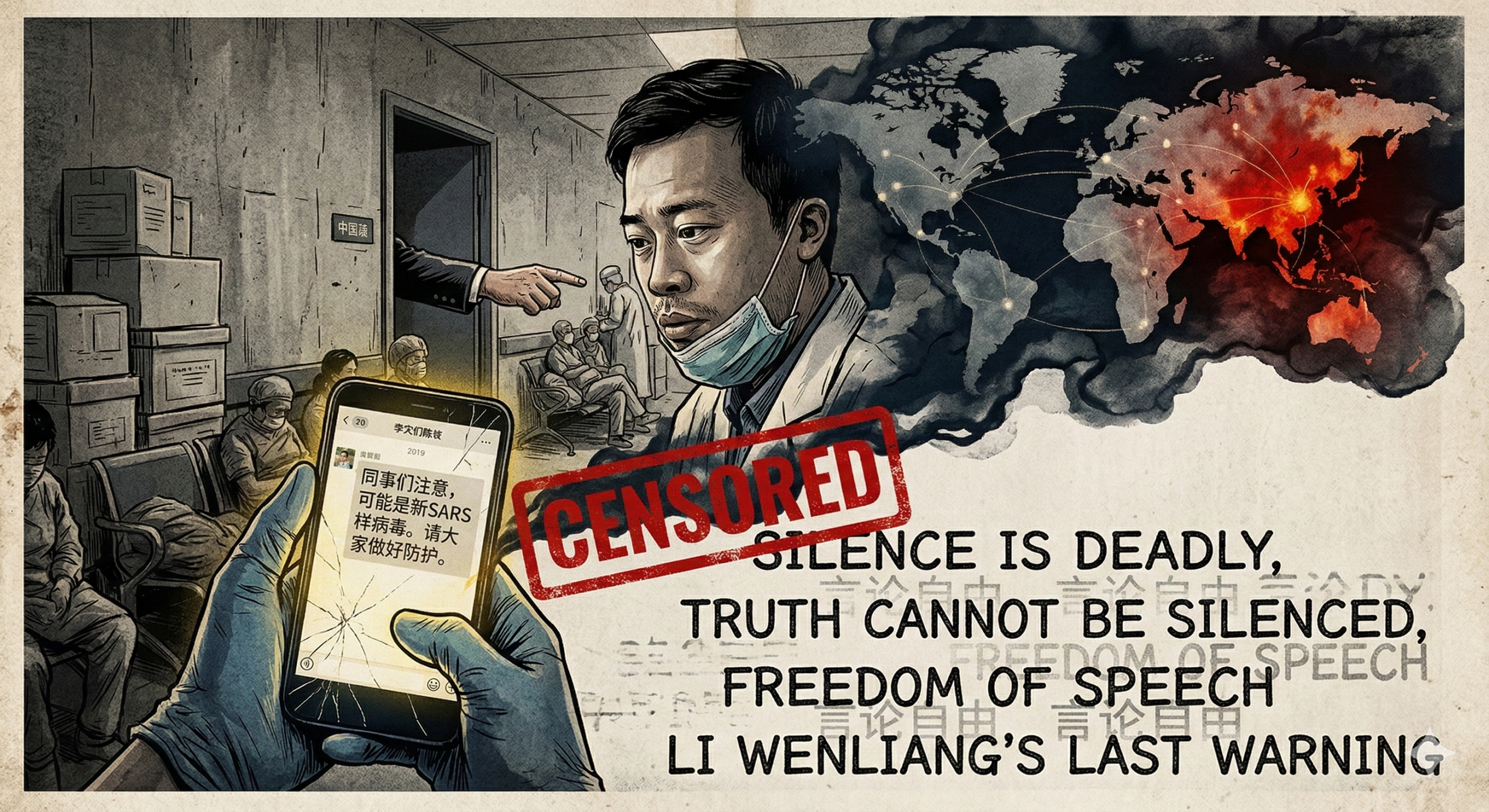
In late 2019, a young doctor in Wuhan tried to do the right thing. Li Wenliang, an ophthalmologist at Wuhan Central Hospital, noticed a cluster of patients with symptoms that looked like a dangerous new virus. He shared a warning with fellow doctors in a private chat, urging them to take precautions.
That warning never reached the public in time.
Instead of being praised for acting responsibly, Li was summoned by local police. He was accused of “spreading rumours” and made to sign a statement admitting fault. The message was clear: stop talking. In an environment where information is tightly controlled, even well-intended warnings can be treated as threats.
Weeks later, the virus—now known as COVID-19—spread rapidly through Wuhan and beyond. Hospitals were overwhelmed. Doctors and nurses struggled with shortages of protective gear. In the middle of this chaos, Li Wenliang caught the virus himself while treating patients. He died on 7 February 2020 at the age of 33.
His death struck a nerve across China.
News of Li’s passing exploded on social media. Millions of people shared messages of grief and anger before posts were censored. Phrases like “We want freedom of speech” briefly trended online. For many, Li became more than a doctor—he became a symbol of what happens when truth is suppressed. People asked a painful question: if his warning had been taken seriously, could lives have been saved?
This reaction was not just about one man. It reflected a deeper fear faced by whistleblowers in authoritarian systems. When power is concentrated and criticism is discouraged, speaking out can carry heavy risks—loss of job, detention, public shaming, or worse. The result is silence, and silence can be deadly, especially during public health emergencies.
Li Wenliang’s story also highlights a global problem. Around the world, doctors, scientists, journalists, and civil servants often see dangers early—unsafe practices, corruption, and environmental threats. When systems fail to protect them, society loses its early warning system. The cost is measured not only in ruined careers, but in human lives.
After widespread outrage, Chinese authorities later acknowledged that Li had been wrongly reprimanded. His police warning was officially withdrawn. But for many, this came too late. An apology cannot undo the consequences of silencing a warning during a fast-moving crisis.
Honouring whistleblowers means more than praising them after tragedy strikes. It means building real protections while they are alive and speaking up. International awards that recognise truth-tellers can help, but they must be backed by legal safeguards—clear laws that protect those who report risks in the public interest, especially in health and safety.
Li Wenliang did not seek fame. He simply tried to warn others so they could stay safe. Remembering his story is not about blaming one country or one system. It is about learning a simple lesson: when truth is punished, everyone pays the price.