-
Coastal Parade: Myanmar’s Chinese-Built Submarines and Their Constraints
Over the past few years, Myanmar’s navy has tried to break out of its traditional mould as a coastal force reliant on patrol craft and small surface combatants. In pursuit of greater credibility, Naypyidaw has taken its first steps into the undersea domain. Submarines are potent symbols of naval maturity, but for Myanmar, the path…
-
With INS Nistar, India Joins an Elite Club of Navies with Deep-Sea Rescue Expertise
July 18, 2025, marked a watershed moment in India’s naval capabilities as the Indian Navy formally commissioned INS Nistar, the nation’s first indigenously designed and built Diving Support Vessel (DSV), at the Naval Dockyard in Visakhapatnam. This milestone places India in an exclusive club of nations possessing advanced submarine rescue and deep-sea diving capabilities, fundamentally…
-
Rethinking the 2004 Indian Ocean Tsunami: A Whistleblower’s Perspective on Strategic Environmental Manipulation
The 2004 Indian Ocean tsunami is widely understood as a natural geological disaster. However, this paper examines the event from a lesser-known perspective—through the lens of intelligence manipulation and environmental warfare. As a former child soldier, intelligence officer with the Liberation Tigers of Tamil Eelam (LTTE), and informant for multiple national security agencies including the…
-
Predators at Sea: Inside Terrorist Tactics Targeting Naval Security
This article critically examines the strategies and methodologies employed by terrorist organizations to target conventional naval assets, including merchant vessels and military ships such as frigates and destroyers. It focuses comprehensively on mechanisms used by terrorists to gather maritime intelligence, especially concerning naval technological systems like radar, sonar, GPS, and various weapon systems, including guns,…
-
The 21st-Century Great Game: Geopolitical Contest for the Central Asian Landmass and the Future of Global Power
This article examines the ongoing geopolitical contest over the Central Asian landmass, encompassing the Caspian region and Siberian land, within the framework of a modern “Great Game.” The struggle for influence between major global powers—primarily the United States, China, Russia, the European Union, and India—is analyzed through economic, military, and strategic lenses. The paper incorporates…
-
Seaborn Terrorist Tactics and Global Maritime Security: Emerging Threats and Countermeasures
Maritime terrorism poses a significant and evolving threat to global security, particularly in regions with substantial maritime trade. The Sea Tigers of the Liberation Tigers of Tamil Eelam (LTTE) in Sri Lanka pioneered sophisticated seaborn guerrilla tactics, inspiring groups like Al-Qaeda’s naval division in the Arabian Peninsula, Al-Shabaab in Somalia, the Houthis in Yemen, and…
-
The Future Implications of Water Wars: A Global Perspective
As freshwater scarcity intensifies globally, competition over water resources is becoming a critical geopolitical and economic issue. Some nations have begun privatizing and even weaponizing water, raising concerns about future “water wars.” This paper explores the factors driving water conflicts, potential geopolitical flashpoints, and strategies for mitigating these tensions. Using a multidisciplinary approach, this study…
-
Why Donald Trump Used the World Economic Forum to Undermine Canada’s Natural Resource Industry: A Strategic Deception
Donald Trump’s address at the World Economic Forum (WEF) in Davos, Switzerland, was marked by a deliberate effort to manipulate global business leaders and marginalize Canada’s critical role in North America’s energy and resource sectors. This paper examines Trump’s strategic rhetoric, which dismissed the need for Canadian oil, lumber, cars, and critical minerals, while conspicuously…
-

Bay of Bengal: India’s Maritime Backyard and the Cost of Alienating the Resident Power
As India continues to strengthen its naval footprint in the region, any effort by Bangladesh to challenge this balance of power risks pushing the smaller nation into vulnerability and irrelevance.
-
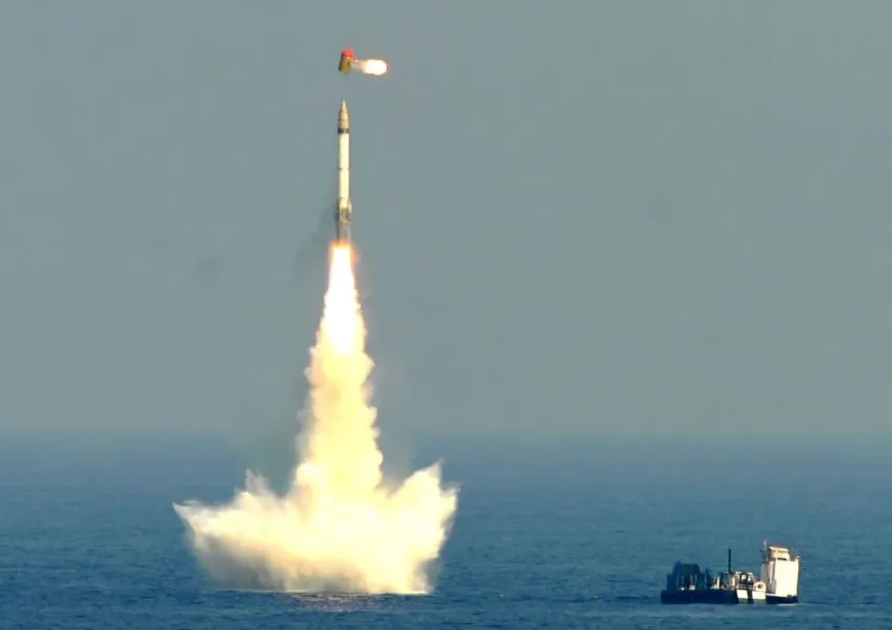
The K-4 Missile Test Propels India Towards Nuclear Submarine Self-Reliance
India successfully tested the nuclear-capable K-4 submarine-launched ballistic missile (SLBM) from INS Arighaat, marking a significant leap in its strategic defense capabilities. With a range of 3,500 km, the missile enhances India’s sea-based nuclear deterrence. Coupled with the recent approval of indigenous nuclear-powered attack submarines (SSNs), this development underscores the nation’s push towards maritime self-reliance…