

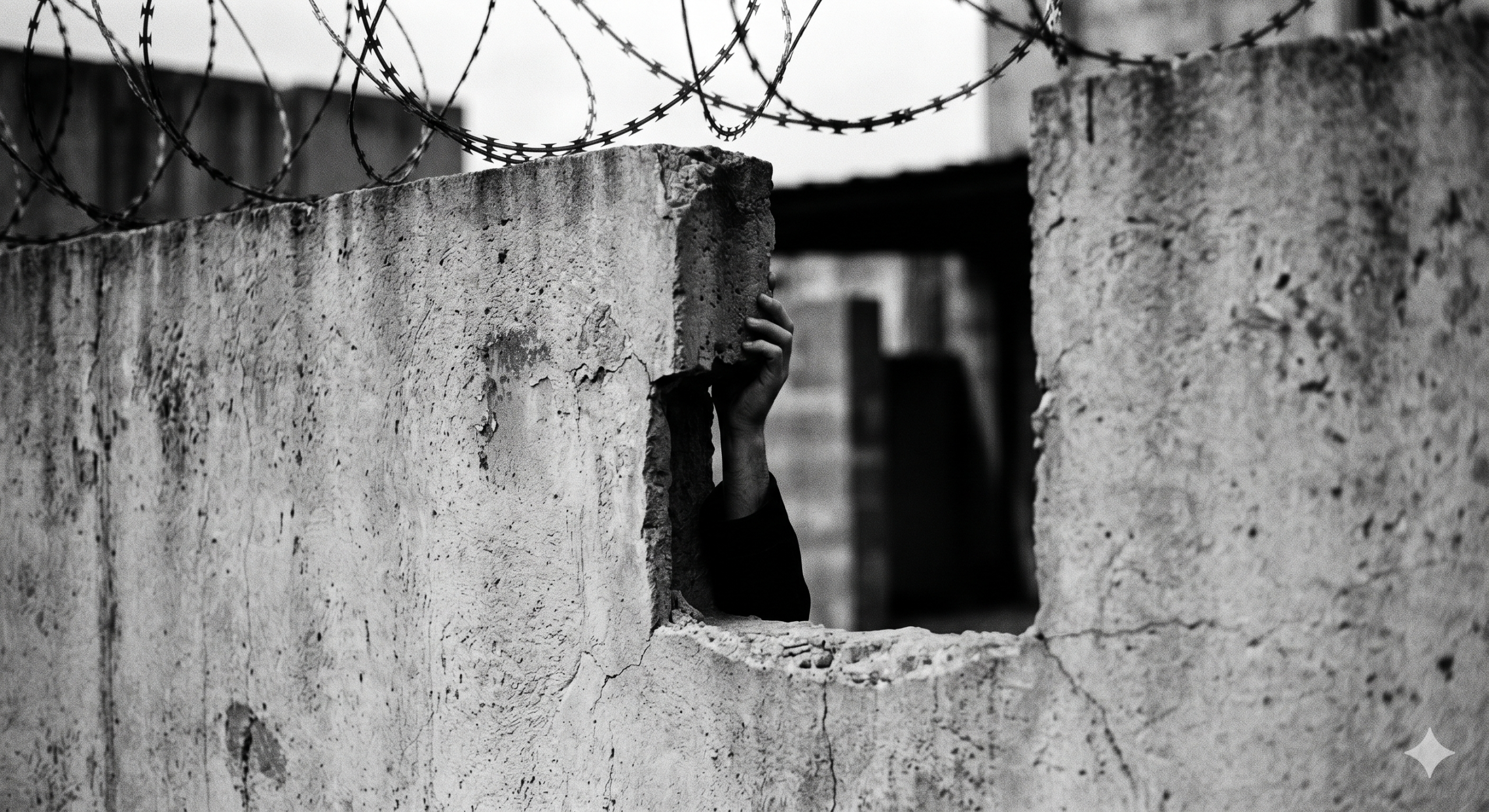
There is a particular cruelty in disappearing someone and then denying they were ever taken. It leaves families suspended in a kind of unresolvable grief — unable to mourn, unable to hope, unable to act. Across Xinjiang, this has been the experience of countless Uyghur, Kazakh, Kyrgyz, and Hui families since the mid-2010s, as China’s Communist Party built and filled a sprawling detention system it simultaneously insisted did not exist in any meaningful sense. When 22 countries brought their formal condemnation to the UNHRC in 2019, they were not acting on geopolitical instinct. They were responding to evidence — evidence that Beijing had worked methodically and at great institutional expense to suppress.
The official Chinese narrative was consistent and polished. State television broadcast footage of bright, orderly facilities — cheerful residents in classrooms, instructors at whiteboards, communal dining halls that looked almost collegiate. Officials spoke of voluntary enrollment, of citizens choosing to better themselves through language learning, legal education, and vocational training. There was no detention in their telling. There was opportunity. There was, in the CCP’s careful framing, compassion.
But former detainees told a different story — and they told it repeatedly, across countries, across years, without coordination, in ways that aligned with unsettling consistency. They described being taken without warning. They described facilities ringed with razor wire and monitored by cameras at every angle. They described cells shared with dozens of people, nights under constant light, days structured around political chants and ideological recitation. They described being forbidden to pray, to fast, to speak their own language. Some described beatings. Many described not knowing how long they would be held, or whether anyone on the outside knew where they were. These were not the accounts of students. They were the accounts of prisoners.
Satellite imagery confirmed what survivors described. Researchers tracking construction in Xinjiang watched, image by image, as large compounds materialized across the region — buildings designed with the specific architectural features of detention: guard towers, doubled fencing, controlled entry points, no playgrounds, no sports fields, nothing that suggested voluntary attendance.
The construction was rapid and large-scale, funded through official government budgets under line items that, when they appeared at all, used anodyne administrative language.
When international bodies asked to visit and verify, Beijing offered carefully managed tours of pre-selected sites, where cameras were permitted only where officials decided. Independent, unannounced inspection was refused. Journalists who travelled to Xinjiang independently reported being followed, obstructed, and watched. Local contacts who had spoken to foreign media were, in a number of documented cases, detained after the reporters left.
Then came the leaks. Internal Chinese government documents — later published under the names the China Cables and the Xinjiang Papers — provided something rare and damning: the system’s own paperwork. These were not foreign intelligence assessments or activist compilations. They were operational manuals, administrative directives, internal communications. They described in clinical procedural detail how to prevent escapes, how to manage family inquiries, how to structure daily indoctrination, how to grade detainees on their ideological progress before considering release. They described, without euphemism in their original context, a coercive mass internment system.
Beijing’s response to each wave of evidence followed the same rhythm: deny, deflect, assert sovereignty. The documents were fabricated. The satellites were misread. The survivors were liars or pawns of hostile foreign governments. And the global outcry, including the formal condemnation from 22 nations at the UNHRC, was nothing more than political interference dressed in the language of human rights.
Behind the walls of Xinjiang, families remain separated. Letters go unanswered. Phone calls connect to silence. And the Chinese government continues to maintain, with the composure of a state that has never genuinely been made to answer, that there is nothing to see. For those who have lost someone to that silence, that claim is not a diplomatic position. It is a wound that does not close.