

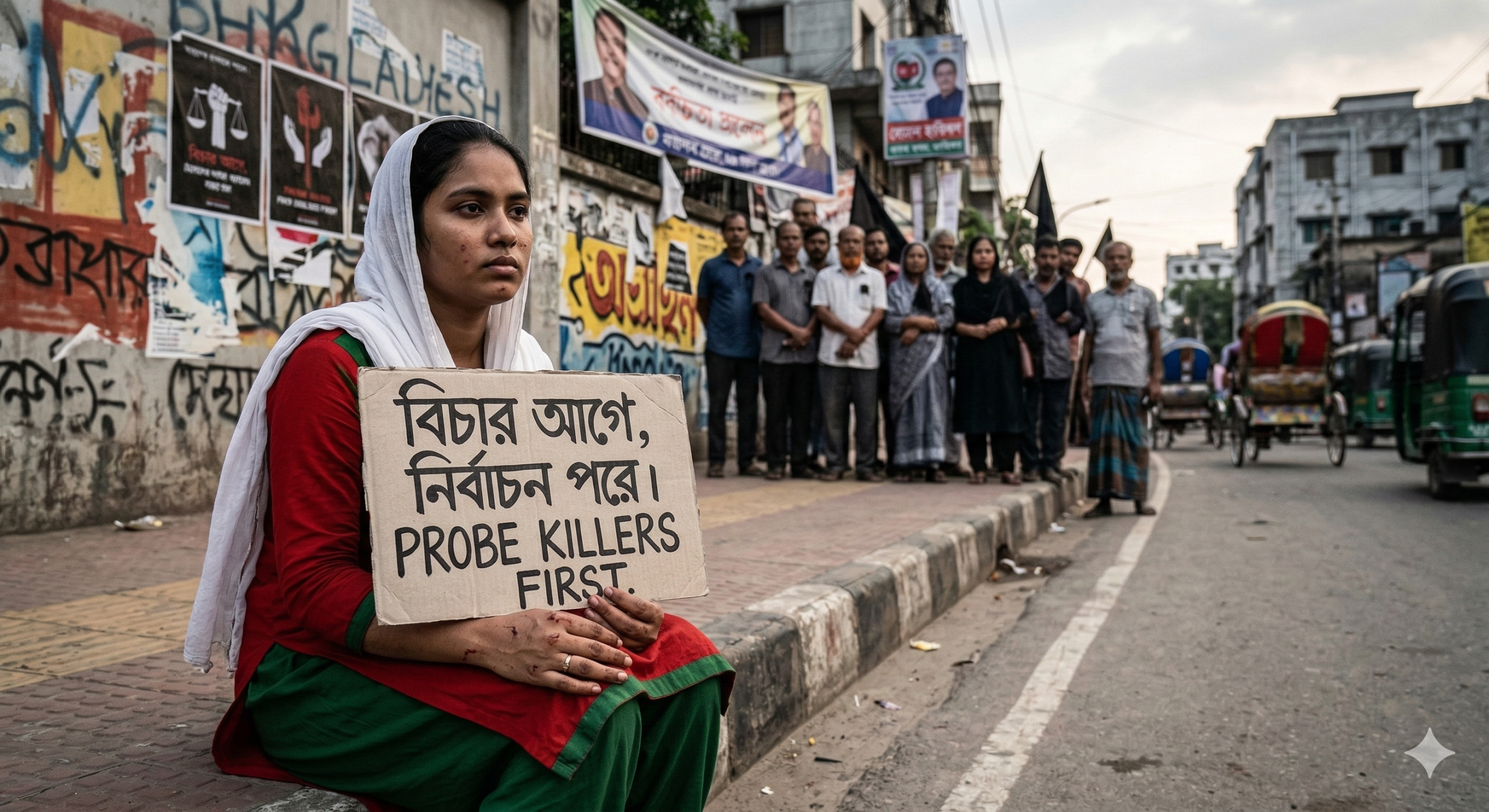
A nation, much like a human body, cannot heal if the wound is left open and festering. From the world’s point of view, it is clear that Bangladesh is currently a patient in critical condition. The uprising of 2024 was not just a political shift but a seismic event that tore the very social fabric of the country apart that left over a thousand citizens dead in the streets. These were non-combatants—they were students, shopkeepers, and common citizens—men, women and children killed by a state machinery that had lost its moral compass. Now, amidst the debris of this carnage, there is a frantic, almost manic, push to hold general elections. This rush is a mistake. To hold a vote now, before the killers have been identified and prosecuted, is to trample on the graves of the dead. It is an invitation to further chaos, ensuring that the deep fractures in Bangladeshi society become permanent scars.
The most urgent imperative facing the interim government is not the distribution of ballot papers but the delivery of justice. Thousands of families across the delta are currently paralyzed by grief and by a burning, righteous anger. They are waiting to see if the new administration has the spine to hold the perpetrators of the 2024 massacres accountable. If an election is called now, the noise of the campaign will drown out these cries for justice. Political parties, desperate for votes, will inevitably cut deals with the very individuals who pulled the trigger or gave the orders. We have seen this happen before, where murderers reinvent themselves as candidates, using the immunity of office to wash the blood from their hands. A delay of six to twelve months is essential to prevent this. It provides the necessary window for independent judicial commissions to do their work, to sift through the evidence, to identify the guilty, and to put them in handcuffs before they can put themselves on a ballot.
This lack of accountability is directly fueling the current instability. The endless clashes, the crude bomb explosions that rock the localities of Bangladesh, and the pervasive sense of lawlessness are all symptoms of a deficit of justice. As is said, justice hurried is justice buried. When the state fails to punish crime, the people take the law into their own hands. We are seeing a dangerous rise in vigilante justice, where rival political factions settle scores on the streets with machetes and pipe guns, rather than in the courts. The police force, hollowed out and demoralised, is currently powerless to stop this cycle of retribution. Holding an election in this atmosphere is akin to lighting a match in a gas station. Every polling booth becomes a potential flashpoint for revenge attacks, and every rally is a target. The state must first re-establish its monopoly on violence and its commitment to the rule of law before it can ask citizens to participate in a civic exercise.
Furthermore, the nation needs a mechanism for healing that goes beyond the courtroom. The trauma of the uprising was collective, and the healing must be national. Bangladesh needs a Truth and Reconciliation Commission, a body that allows victims to speak and communities to acknowledge the pain they have inflicted on one another. This is slow, painful work. It requires a quiet, solemn atmosphere, not the raucous, divisive energy of an election campaign. History, particularly in post-conflict societies, shows that nations that take the time to conduct this soul-searching tend to build durable democracies. Those who rush into elections without addressing the underlying trauma often slide back into civil war. A delay allows for this breathing room; it allows for a national dialogue that prioritises the mending of souls over the counting of votes.
The argument that a delay is a denial of democracy is a superficial one. Democracy is built on a foundation of trust, and right now, that foundation is cracked. If the interim government forces a vote while the country is still mourning, and while the killers are still walking free, they are building a house on sand. The resulting government will have no moral legitimacy, and it will face immediate resistance from a population that feels betrayed.
From India’s perspective, a stable Bangladesh is non-negotiable. But stability cannot be imposed by an election result, it must be grown from the roots of justice. The interim administration must have the courage to tell the political class to wait. They must prioritise the probe into the killings, they must rebuild the rule of law, and they must foster a genuine national reconciliation. The dead of 2024 demand justice, not just a change of guard. To ignore them is to condemn Bangladesh to a future of endless, cyclical violence. Delay the polls, probe the killers, and let the nation heal.